Perplexity Computer: How a 19-Model AI System Works and Why It Matters for Your Business
I don’t often call something different in AI, most announcements are incremental. But today’s launch from Perplexity feels like a shift in how we think about AI assistants in business workflows.
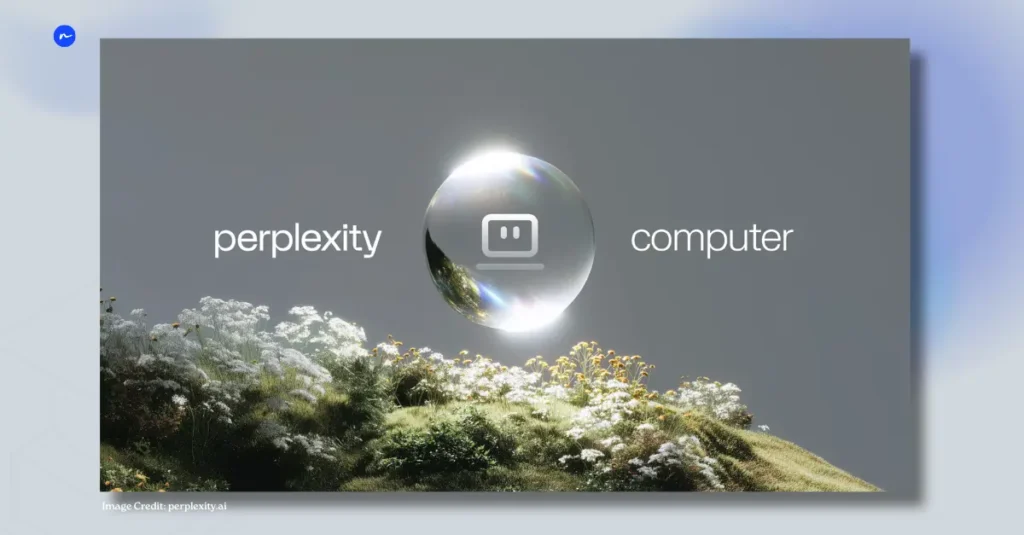
Perplexity has introduced Perplexity Computer, a system that isn’t just a chatbot or research helper – it’s what Perplexity calls a general-purpose digital worker capable of running real workflows across multiple specialised models without constant human prompting.
CEO Aravind Srinivas post this on X:
“What has Perplexity been up to last two months? We’ve silently been working on the next big thing: Perplexity Computer. Computer unifies every current capability of AI into a single system.”
You describe what you need done, and Computer orchestrates the work behind the scenes – breaking your goal into tasks, assigning each to the 1 of 19 best model available, and stitching the results back into an output.
Let’s unpack what this means, and why it matters.
One Topic: Perplexity Computer
What Is Perplexity Computer?
It’s not a chatbot upgrade. It’s not a smarter search box.
Perplexity Computer is a cloud-based AI system that acts like a digital worker. You describe an outcome. It breaks it into tasks. It assigns each task to the best AI model available. And it can run sometimes for hours, sometimes for months until the work is done (acc. to Perplexity).
That’s the core shift: from answering questions to completing projects.
You type: “Build me a stock research dashboard that pulls live data, calculates key metrics, and emails me a weekly summary.”
It plans, builds, deploys, and schedules. You come back to a finished product.
Here’s what makes it different: it doesn’t rely on one model. It orchestrates 19 AI models in parallel – Claude Opus 4.6 as the core reasoning engine, Gemini for deep web research, GPT-5.2 for long-context work, Grok for fast lightweight tasks, Nano Banana for images, Veo 3.1 for video etc.
Srinivas described it well using a Steve Jobs line: “Musicians play their instruments, I play the orchestra.”
That’s Perplexity Computer. It’s the conductor.
How Is This Different From Regular Perplexity?
The Perplexity you know is a brilliant search engine. Ask a question, get an answer with citations. That’s it.
Computer is different in three ways:
- From answers to outcomes: it doesn’t just tell you things, it builds things.
- From one-shot to persistent: it runs in the background for as long as needed.
- From one model to many: it picks the best model for each part of the job, automatically.
Think of old Perplexity as a smart research assistant. Computer is more like a project team that works while you sleep.
How Does It Compare to OpenClaw Claude Code and Claude Cowork?
This is where it gets interesting, and slightly nuanced.
OpenClaw is an open-source AI agent with 219,000 GitHub stars. You run it yourself, usually on a local server, Mac Mini or VPS. It connects to Telegram, Discord, WhatsApp, Slack, iMessage, manages your calendar, clears your inbox and many more things. It’s powerful, but it’s DIY. You set it up. You secure it. You maintain it.
Perplexity Computer is essentially managed OpenClaw. Kind of same idea – always-on agent doing real work across your tool stack, but fully cloud-hosted, with no hardware to manage, no security configuration, and 400+ app integrations built in.
Claude Code, on the other hand, is a focused developer tool. It’s exceptional at understanding large codebases, debugging, refactoring. One model, deep precision, developer-first.
Claude Cowork, is build for non-developers, integrate with many plugins, tools, commands, also Anthropic catching up with scheduling task and other features to provide enterprise-grade software similar to OpenClaw.
Perplexity Computer plays a different game. This is more than “AI with plans.” It’s AI with execution rails and model routing logic built in. It handles the entire lifecycle – research the APIs, write the code, deploy to a host, set up a CRON job, keep it running. One tester on YouTube (Boxmining) found Claude Code produced cleaner code when judged as a pure coding assistant. But Perplexity Computer took a project from idea to deployed, live dashboard in two prompts. But, I need to test myself to confirm this.
Two different tools for two different moments.
Where Does This Actually Help Businesses?
Here are the use cases I find most practical right now:
- Research & Strategy teams: Run multi-source market research, pull competitor data, structure it into a report with slides, automatically every week.
- Marketing operations: Pull SEO metrics, analytics, and CRM data into a weekly performance summary with next steps drafted. No manual reporting.
- Technical teams: Build internal dashboards and admin tools from plain-language specs. Computer plans, codes, and deploys.
- Executive workflows: Brief yourself every Monday morning. Computer reads your Jira, Notion docs, new industry articles, and produces a summary before you start work.
- Prototyping & Product Workflows: A product manager can ask for a proof-of-concept web app. The system can research tech stacks, draft architecture docs, generate code scaffolding, and bundle results.
- Automation of Complex Work: Finance teams running cross-market analysis, legal teams preparing multi-jurisdiction compliance summaries, and operations teams building workflow documentation – all can benefit from running multiple steps in one command.
Internally, Perplexity says they’ve been running Computer since January 2026. They built a 4,000-row data spreadsheet overnight, work that would have taken a team about a week.
Is It Worth It?
Short answer: we need to test in detail how it performs, whether it’s cost-effective or not, etc.
Perplexity Computer is currently available to Max subscribers at $200/month. Credits-based pricing. Max users get 10,000 credits monthly plus a one-time 20,000 credit bonus at launch. It will be release to Pro Plan users in coming weeks.
For individuals? Probably too early to judge.
For teams with repetitive, high-value workflows that someone currently does manually every week? Worth a serious look.
The honest framing: this isn’t about whether Perplexity Computer is better than Claude or GPT. It’s a layer above all of them. The question for your business is simpler – where are you wasting hours on work that follows a repeatable pattern?
That’s where Computer earns its price.
The shift from “pick a model and prompt it” to “describe an outcome and let the system organise the work” is happening. The opportunity right now is to get good at describing outcomes, and knowing which workflows are worth handing over.
What is your view? Please reply in the email or comment below.
Interested in travel or photography, read last week’s LensLetter newsletter about Stop Shooting and Start Telling Stories.
Read last week’s JustDraft about How AI Is Evolving So Fast and What It Means for You.
Two Quotes to Inspire
Strategy isn’t a list of what you want to do; it’s a choice of what you won’t do.
True leadership in the AI era is knowing when to trust automation and why human thinking still matters.
One Passage From My Bookshelf
Every moment in business happens only once. The next Bill Gates will not build an operating system. The next Larry Page or Sergey Brin won’t make a search engine. And the next Mark Zuckerberg won’t create a social network. If you are copying these guys, you aren’t learning from them. Of course, it’s easier to copy a model than to make something new. Doing what we already know how to do takes the world from 1 to n, adding more of something familiar. But every time we create something new, we go from 0 to 1. The act of creation is singular, as is the moment of creation, and the result is something fresh and strange.
Book: “Zero to One” by Peter Thiel